

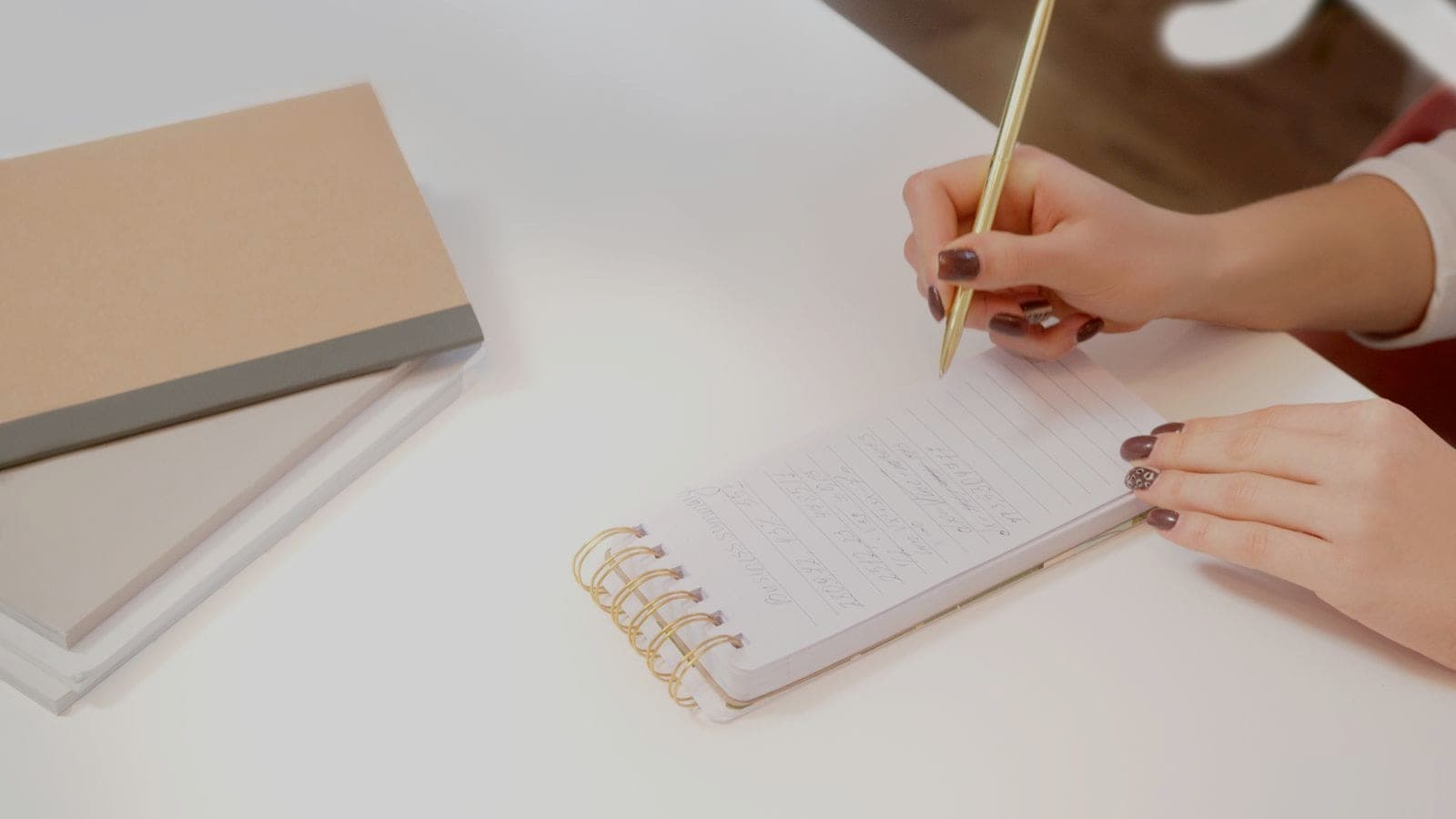
Cornell Notes: How to Take Notes That Work
Published July 28, 2026
Cornell notes divide the page into three zones: a narrow left column for questions, a wide right column for the notes themselves, and a strip across the bottom for a summary you write later. The layout is not the point. The point is that two of those three zones can only be filled after the lecture ends, which forces you to come back to your notes at all.
Most note systems fail at exactly that step. You write during class, the page looks reasonable, and you never open it again until the week before the exam, when you discover it is a transcript of someone else talking.
What are Cornell notes?
Cornell notes are a page layout with three zones, designed so that taking notes and using notes are two separate jobs done at two separate times.
Walter Pauk, a reading and study skills professor at Cornell University, published the method in 1962 in a book aimed at students who were working hard and getting poor results. The diagnosis he made then still holds: the problem was rarely effort during the lecture, it was that nothing happened between the lecture and the exam.
The three zones map onto that gap. The right column holds what you capture live. The left column holds the questions you write afterwards, once you know what the material was actually about. The bottom strip holds the summary you write last, in your own words, when you can see the whole page.
Why does the layout work?
Because it makes the useful work impossible to skip without noticing.
An ordinary page of notes has no empty space demanding to be filled. You can close it and feel finished. A Cornell page closes with two thirds of its structure blank, and a blank left column is a visible debt. That is a weak mechanism on paper and a surprisingly strong one in practice.
The second reason is that the left column produces questions rather than headings. A question is testable. Once the column is full you can cover the notes, read the questions, and answer them from memory, which turns the page into a self test rather than something to reread. That is the exercise that actually builds memory, and it is covered properly in active recall.
How do you fill the three zones?
In three passes, at three different times.
- During the lecture, right column only. Capture meaning, not words. Short lines, one idea each, plenty of vertical space between them. Leave a gap when you miss something rather than stalling to catch up.
- Within a day, left column. Reread the right column and turn each block into one specific question. Not "photosynthesis" but "what does the light dependent stage produce, and where does it happen". If a block resists becoming a question, that block is where you did not understand the lecture.
- Same sitting, bottom strip. Write two or three sentences summarizing the page from memory, without looking up. If you cannot, the page is not learned yet, and you have found that out in three minutes rather than in June.
The second pass is the one people drop first, and it is the one carrying the method. A Cornell page with an empty left column is just a narrow page of ordinary notes.
What makes a good question in the left column?
One that has a definite answer you either produce or do not.
Vague prompts feel productive and grade dishonestly. "Discuss the causes of inflation" cannot be marked right or wrong, so you will always half remember something and move on. "Name the three demand side causes listed in the lecture" can be marked in two seconds. The narrow column helps here: there is physically no room for an essay prompt.
Some questions from a page are worth keeping beyond that page, and those are the ones that become cards and enter a review schedule. Which questions deserve that, and how far apart to space the reviews, is the subject of spaced repetition and the forgetting curve.
When are Cornell notes the wrong tool?
When there is nothing to capture live, or when the material is not linear.
Three cases where the layout fights you:
- Problem based subjects. Maths and physics lectures are worked examples. What you need is the worked example itself with the reasoning between the lines, not a summary of it. Keep the questions column if you like, but the right column stays a full transcript of the derivation.
- Dense reading rather than listening. When you control the pace, you do not need a capture system, you need a selection system. Read the section, close it, and write what mattered.
- Highly visual material. Anatomy, circuits, phase diagrams. A three column text layout will make you describe a diagram in words, which is slower and worse than copying the diagram.
The method is also not a filing system. It produces good pages, and good pages still need to be revisited on a schedule, which is where most of the difference between students actually lives: how to study effectively.
Do the zones have to be handwritten?
No. Whether paper beats typing is still argued over, and the argument is mostly about the first pass, which is the pass the method cares least about.
What decides the outcome is whether the second and third pass happen at all. A photographed page, a typed document or a recorded lecture can each become a set of questions and a summary. Orbily was built around that step: it turns what you import into a chapter you can then question, which is the sequence Pauk described with the transcription taken out.
Where to start
Take the notes from your last class, draw a line down the page a third of the way in, and write one question per block in the new column. Ten minutes.
Then cover the right side and answer them. The count of questions you cannot answer, one day after the lecture, is the single most useful number you will get this week, and it is usually higher than anyone expects.
FAQ
Walter Pauk, who ran the reading and study centre at Cornell University, published it in 1962 in a book written for students who were working hard and getting poor grades. The layout was the visible part of a wider argument: that what students did after a lecture mattered more than how fast they wrote during it.
About a third of the page, and the narrowness is deliberate. A wide column invites you to write a second set of notes in it; a narrow one only fits a question. If your questions keep running out of room, they are probably essay prompts rather than questions with one definite answer.
Better than for live ones, because you can pause. The risk is the opposite one: with the pause button available, the right column drifts towards a full transcript. Give yourself the same constraint you would have live, capture meaning only, and spend the time you saved on the question column instead.
Ten to fifteen minutes for one lecture, done the same day. If it is taking an hour, you are rewriting the notes rather than questioning them. The pass is meant to be cheap enough that you actually do it after every class, which matters far more than doing it thoroughly after one.
They answer different problems. Cornell notes are built for linear input you cannot pause, such as a lecture, and produce testable questions. Mind maps are built for showing how ideas connect, which suits revision and planning. Using a mind map to capture a fast lecture usually fails, because the structure is not knowable yet.
Do not go back and fill them all in. Take the two or three topics you are weakest on, fill those, and start doing the second pass properly from today. Filling a term of backlog is a long job with no testing in it, and it usually ends with the habit abandoned again.